Joy Is a Health Habit (But Only If You Let It Be)
Joy Is a Health Habit (But Only If You Let It Be)
A few weeks ago, I sat down to plan my joy.
Yes, you read that right.
I opened my laptop, pulled up my work calendar, and started making a list of everything I wanted to do this summer.
Jersey Shore. Horseback riding with my girlfriend. The garden. The pool. Barbecues with the cousins. Barbecues with the friends. (Different groups, different weekends.) Walks. Community talks. My meetup group. Quality time with my dad.
It was a beautiful list.
And it was stressing me out completely.
I sat there trying to fit joy into the gaps between work shifts and dinner with my father and I just... couldn't find them. The calendar was already filling up and summer hadn't even started.
So I did the only sensible thing.
I closed the laptop, grabbed the leashes, and took my dogs across the street into the woods.
🎧 Prefer to Listen?
You can listen to the audio version of this post here:
What happened in those woods matters more than the list.
Within about ten minutes, something shifted. The air. The movement. The dogs being the dogs. My
shoulders came down from around my ears.
I wasn't thinking about the calendar anymore.
I was just walking.
And I realized this: This is one of the things I actually love. Not the planned version of joy. The accidental kind.
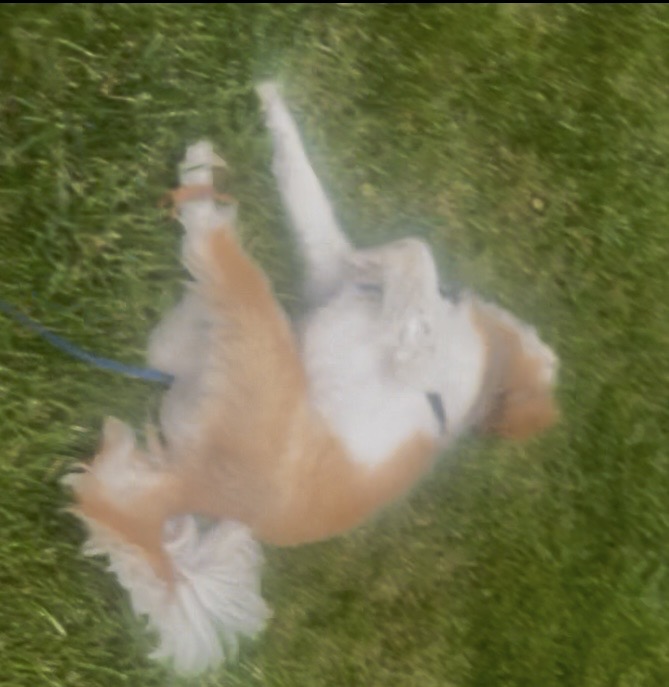
On the way back home, my brain started winding up again — the list, the calendar, the things I still hadn't figured out — and then my dog Benji threw himself onto the front lawn and started rolling. Just rolling and rolling on his back, completely unbothered, delighted about absolutely nothing.
I laughed out loud.
And I thought: he has it figured out.
Here is what I know as a PA, and what I forget as a human.
Joy is not a reward for finishing your to-do list. It is not something you earn after the work is done and the calendar clears.
Joy is a health habit. Literally.
Positive emotions lower cortisol, your primary stress hormone. They broaden your thinking, which makes you more creative and more resilient. Research on longevity consistently shows that people who experience regular moments of joy, connection, and pleasure live longer and age better.
Not big dramatic joy. Small, repeated joy.
Benji rolling on the lawn. Twenty minutes in the woods. A swim before dinner. A phone call with a friend on the drive home.
Your nervous system does not need a perfect summer. It needs small regular signals that life is good right now.
Where we go wrong (and I include myself here)
We treat joy like a project.
We make the list. We book the thing. We try to fit it all in and optimize it and make sure we don't miss anything and suddenly joy has a deadline and a spreadsheet.
That is not joy. That is anxiety wearing a sun hat.
The research on positive emotions, particularly Barbara Fredrickson's broaden-and-build theory, tells us that joy works through accumulation, not intensity. Ten small moments across a week do more for your nervous system than one perfect day you planned for months.
So the goal is not to check everything off your summer list.
The goal is to stop walking past the things that are already good.
One thing to try this week
Not a list. Not a calendar item.
Just notice one moment today that makes you feel good and stay in it for sixty more seconds than you normally would.
That is it.
Give your nervous system a chance to register it and it will do the rest.
And if your dog happens to roll on the lawn, stay and watch. It turns out they know something we forgot.
With Calm & Infinite Possibilities,
Chrissy D' xoxo
---
Joy lowers stress hormones. It broadens thinking. It supports longevity. And sometimes it looks like a dog named Benji having the time of his life on a Tuesday afternoon.